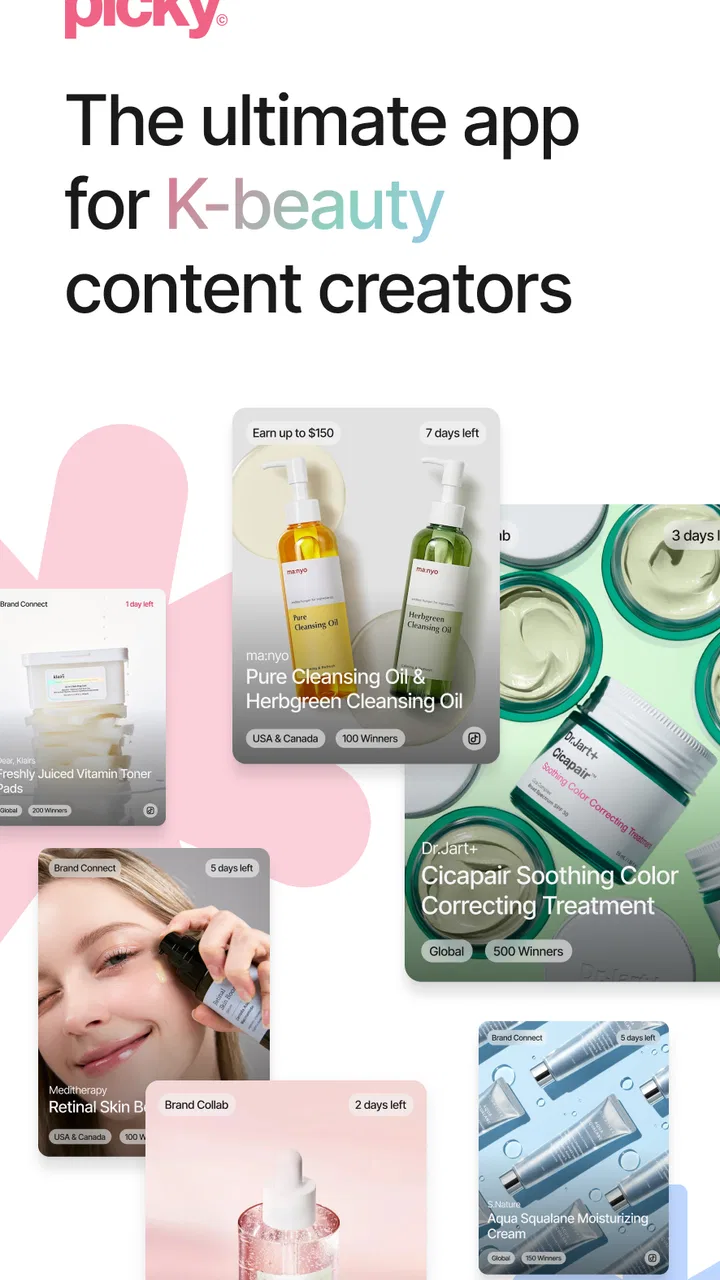
Picky - Beauty Community
- 3.2
- Rating
- 100.00K
- Installs
- Free
- Price

 Analysis by App-foxy
I came away from Picky - Beauty Community with the feeling that it is most useful when you want to learn from other beauty shoppers rather than simply browse products. It is a free beauty app from Picky, Inc. built around discovering, sharing, and earning rewards, but its real value is the conversation around skincare and cosmetics. Instead of treating beauty shopping as a one-way search, it gives you a place to compare opinions, ask practical questions, and notice how different people react to similar products.
That community focus makes it more interesting than a basic product catalog, although it also means your experience depends on how willing you are to read carefully and participate. I would recommend it to someone who enjoys researching skincare before buying and wants opinions from people with different routines. I would be more cautious about recommending it to anyone looking for a quick, clinical answer or a perfectly organized personal beauty planner.
What using Picky feels like in everyday life
The easiest way to understand the app is to imagine a normal shopping decision. I might be considering a new cleanser, sunscreen, or moisturizer and feel overwhelmed by polished product claims. In that situation, I can use the community as a second layer of research. I am not only looking at what a product says it does; I am also paying attention to how people describe texture, irritation, layering, finish, and whether they would buy it again.
You May Also Like

 Blood Strike: 2.5 Anniversary
Blood Strike’s Loadouts Turn Every Drop Into a Tactical Gamble
A close look at Blood Strike’s custom loadouts: how fast access to signature weapons reshapes its battle royale rhythm, rewards preparation, and narrows the gap between fights.

 Pandora - Music & Podcasts
Pandora’s Music Is Easy to Start, but Harder to Recover
Pandora’s strength is its low-effort path from a seed to a station. Its weak spot is how much confidence it asks you to place in connection, setup, and quiet recovery.

 8 Ball Pool
 Is Built on Rivalries, Rematches, and Routine
A close look at the rivalries, rematches, shared routines, and unanswered safety questions that turn a quick pool match into a persistent mobile community.

 Samsung Music
’s Quiet Strength Is Playing What You Already Own
Its reach comes less from spectacle than from dependable access to a personal library. That simplicity is both the app’s strongest retention engine and its ceiling.

 AccuWeather: Weather Radar
AccuWeather Review: A Quick, Clear Forecast for Everyday Decisions
For everyday plans, the best forecast is the one you can understand quickly. AccuWeather makes rain timing, radar, and local conditions easy to act on, with a few trade-offs.

 Hill Climb Racing
Why Hill Climb Racing Still Turns Crashes Into One More Run
A tiny car, a bumpy hill and one more upgrade: Hill Climb Racing keeps resurfacing because its simple chaos makes every near-miss feel personal.
More From Our News Desk



That distinction matters. Beauty products can perform very differently depending on skin type, climate, routine, and personal tolerance. A short comment from someone with dry, sensitive skin may be more useful to me than a general promotional description, while another user’s experience may be irrelevant if their skin behaves differently. Picky works best when I treat individual posts as context rather than universal truth.
The app sits in the beauty category, and its audience is clearly people who enjoy exchanging opinions about skincare and related products. Its store summary, “Discover, Share, Earn Rewards,” captures the broad direction, but the practical experience is less about passively collecting recommendations and more about deciding which community opinions deserve my attention.
I also appreciate that the app is free to download and use. That lowers the barrier for someone who is curious but not ready to commit to a paid beauty service. The content rating is Teen, so younger users can encounter it as well, though I would still encourage anyone to approach product advice thoughtfully and avoid treating community enthusiasm as medical guidance.
Why the community angle is genuinely useful
The strongest part of the experience is the variety of viewpoints. A product can look impressive in a brand photo and still feel heavy, sting around the eyes, pill under makeup, or leave an unwanted finish. Community discussion is often where these practical details appear. I find that especially helpful for products whose performance is difficult to judge from a label alone.
One useful habit is to read several opinions before forming a view. I look for repeated observations rather than focusing on the most enthusiastic comment. If multiple people mention a similar texture or a common problem, that gives me a stronger reason to investigate. If opinions are divided, I treat that as a sign that the product may be highly dependent on skin type or routine.
This makes the app more valuable for comparison shopping. I can use it before visiting a store, while deciding between two similar products, or after receiving a recommendation from a friend. It is particularly helpful when I want to understand the everyday experience of using something, not just its ingredient list or headline benefit.
Another strength is that sharing is part of the design rather than an afterthought. Writing down what worked and what did not can help other people, but it also makes me more aware of my own routine. When I describe how a product feels after several steps, I have to think about what I actually liked: the finish, the comfort, the speed of absorption, or the way it behaved with other products.
That reflective side is easy to overlook. A beauty community can become a personal record of decisions and reactions, even when it is not being used as a formal diary. I would not rely on it as a precise treatment tracker, but it can help me remember why I liked or disliked something and avoid repeating the same purchase mistake.
Rewards can encourage participation, but they should not lead the decision
The promise of earning rewards gives the community an additional reason to return. For some users, that can make reviewing and sharing feel more worthwhile. I can understand the appeal: beauty products are personal purchases, and receiving something in return for useful participation may encourage people to contribute more consistently.
Still, I think rewards should remain secondary. The moment I start writing only to earn something, the quality of my opinion can suffer. A helpful beauty review needs details about the actual experience, including who might not enjoy the product. If I use the app, I would focus first on being accurate and specific, then treat any reward as an extra benefit rather than the purpose of every interaction.
This is also a practical way to judge the community. The best contributions are not necessarily the longest or most excited. I look for posts that explain a person’s skin concerns, routine, expectations, and reason for liking or disliking an item. That kind of context is more valuable than a simple positive reaction, and it helps me separate useful experience from impulse enthusiasm.
Three ways I would use it more intelligently
My first tip is to search by problem, not only by product name. If I am concerned about dryness, sensitivity, shine, or makeup compatibility, I want to see how people discuss those experiences around a product. This approach can reveal practical trade-offs that a product-centered search may hide.
My second tip is to compare the timing of opinions. A first impression can tell me about scent, texture, and immediate comfort, but it cannot answer every question about continued use. When I read community posts, I pay attention to whether someone is describing an initial reaction or a longer routine experience. That difference helps me avoid expecting instant certainty from a single comment.
My third tip is to use the app as a filter before checking more authoritative sources. If several users raise a question about an ingredient, irritation, or suitability, I would investigate further through a dermatologist, pharmacist, or reliable product documentation. Picky is useful for discovering what questions to ask; it should not replace professional advice for persistent skin concerns.
A fourth habit is to compare people with similar routines rather than chasing the highest praise. Someone who uses minimal products may judge a moisturizer differently from someone who layers several hydrating steps. Likewise, a person living in a humid environment may have a different view of a finish than someone in a dry climate. The community becomes much more useful when I match experiences intelligently.
Where the experience can become frustrating
The same community structure that creates variety can also create noise. Beauty discussions naturally include personal preferences, strong opinions, and recommendations based on limited experience. Even when a post is sincere, it may not provide enough background for me to know whether the advice applies to my skin.
That means the app asks me to do more judgment work than a tightly edited beauty guide. I need to compare viewpoints, notice missing context, and resist turning popularity into proof. Someone who wants a simple answer such as “buy this one” may find the process slower than expected.
There is also a trade-off between discovery and focus. Browsing beauty conversations can be enjoyable, but it can encourage me to look at products I was not planning to buy. For users trying to reduce impulse purchases, the community should be used with a clear question in mind. I would open it before a planned purchase, not endlessly browse whenever I am bored.
The reward element may add another layer of uncertainty to how I interpret participation. I would not assume that a highly visible or enthusiastic contribution is automatically more reliable. The most useful approach is to judge the explanation itself. Does the person describe the product fairly? Do they mention limitations? Do they explain what kind of skin or routine they have?
These are not reasons to dismiss the app, but they do define its limits. Picky is a social research tool, not a substitute for professional diagnosis, a guaranteed product-matching service, or a perfectly neutral testing laboratory. Its strength is lived experience, and lived experience is always personal.
How it compares with the usual beauty alternatives
Compared with a retailer’s product page, Picky offers more room for real-world discussion. Retail pages are convenient for ingredients, availability, and purchasing, but they often present products in a controlled way. A community can add the details that shoppers usually want after reading the official description: how something spreads, whether it feels comfortable, and what happened when it was combined with other steps.
Compared with short-form social media, the app feels more focused on beauty decisions. Social platforms can offer quick demonstrations and attractive routines, but their pace may encourage instant reactions. Picky is better suited to deliberate comparison, especially when I want to read several perspectives rather than follow one creator’s preferences.
Compared with a dermatologist or trained professional, however, it serves a completely different purpose. Community members can describe personal experiences, but they cannot provide the same level of individualized medical assessment. If I have a persistent or painful concern, I would choose professional help first and use the app only for general product discovery afterward.
Compared with a private notes app, Picky has the advantage of an audience and shared knowledge. A notes app is better for a controlled personal record, especially if I want to track dates, reactions, or routine changes without distraction. Picky is better when I want outside perspectives and the possibility of learning from people who have already tested products I am considering.
Who will get the most from it
I think the best audience is a curious skincare shopper who enjoys comparing experiences and is willing to read beyond the first opinion. It is a good fit for someone building a routine gradually, trying to avoid unsuitable purchases, or looking for practical information about how products behave in daily use.
It can also suit users who like contributing. If I enjoy explaining why a product worked for me, including the details that another shopper might need, the sharing side feels meaningful. The reward system may provide extra motivation, but the community is most valuable when contributions remain honest and specific.
I would be less likely to recommend it to someone who wants a completely private routine manager, a professional consultation, or a rapid shopping shortcut. It may also be a poor fit for anyone who finds beauty browsing tempting and has difficulty separating research from impulse buying.
For a new user, I would start with one concrete goal. I might investigate a product I already plan to buy, compare a couple of alternatives, or look for experiences from people with similar concerns. I would save my conclusions outside the app if I needed a long-term record, and I would avoid changing several routine steps at once based on community suggestions. That keeps the experience useful and makes it easier to understand what actually caused a reaction.
Compatibility, maturity, and overall polish
The app supports Android devices running version 7.0 or later, which makes it accessible to many older phones as well as newer models. The current version is 6.0.0, and the developer is Picky, Inc. Those details matter if I am installing on an older device or deciding whether the app fits into an existing mobile setup.
Its reach is already substantial, with over one hundred thousand installs, while the average rating sits at 3.4 from around one thousand seven hundred ratings. I read that as a sign of a useful but not universally smooth experience. The app clearly attracts a real audience, yet the rating also suggests that expectations and day-to-day usability may vary.
That balance matches my impression. The concept is stronger than the idea of simply collecting beauty posts: it gives shoppers a way to investigate products through personal context. At the same time, the app cannot remove the uncertainty that comes with community advice. Its usefulness depends on how carefully I interpret what I read.
It has received 171 reviews in the store, and I would consider both the overall rating and the written reactions before installing. A numerical score can indicate general satisfaction, but written feedback is more useful for discovering whether people are happy with the community experience, the organization, or the way the app fits their particular needs.
My final recommendation
Picky - Beauty Community is worth trying if you want beauty discovery with a human point of view. I like it most as a research companion: I use it to gather questions, compare everyday experiences, and make a more informed shortlist before spending money. Its free price makes experimenting easy, and the combination of discovering, sharing, and rewards gives the app a clear identity beyond a standard product browser.
I would not use it as my only source of skincare guidance. The community can be insightful, but it can also be subjective, repetitive, or lacking the context needed for a confident decision. The smartest way to use it is to look for patterns, match experiences to my own situation, and verify serious concerns elsewhere.
For me, the decisive question is whether I enjoy the process of researching beauty products. If I do, the app can turn a confusing purchase into a more thoughtful one and may introduce perspectives I would not find on a retailer page. If I want a clinical answer, a private tracker, or a one-tap recommendation, another option will probably serve me better.
Overall, I see it as a useful community-led beauty companion rather than a final authority. I would recommend giving it a try before a planned purchase, keeping expectations realistic, and contributing only when I can explain my experience clearly. Used that way, it offers genuine value without asking me to mistake personal opinion for universal advice.
FAQs for Picky - Beauty Community
01What is Picky - Beauty Community?
Picky - Beauty Community is a platform designed for beauty enthusiasts to explore, review, and share insights on various beauty products. It connects users with a community of like-minded individuals, providing authentic reviews, expert advice, and personalized recommendations based on individual skin types and preferences.
02How does Picky personalize product recommendations?
Picky personalizes product recommendations by using user-provided information such as skin type, concerns, and preferences. The app analyzes this data to suggest products that best suit your individual needs, ensuring a tailored beauty experience. Additionally, user reviews and community discussions further refine these recommendations.
03Is Picky free to use, or are there premium features?
Picky is free to download and use, offering a wide range of features at no cost, such as community forums and product reviews. However, there may be premium features or in-app purchases that provide enhanced functionality or exclusive content, which users can choose to access at their discretion.
04Can I trust the reviews and ratings on Picky?
The reviews and ratings on Picky are provided by real users who share their honest experiences with beauty products. The platform encourages transparency and authenticity, allowing users to upvote helpful reviews, which helps highlight the most reliable feedback. Additionally, expert reviews add another layer of credibility.
05How do I participate in the Picky community?
To participate in the Picky community, simply create an account and complete your profile. You can then start exploring product reviews, join discussions, and share your own experiences. Engaging with the community through comments and feedback not only enriches your experience but also helps others make informed beauty decisions.
Pros
- User-friendly interface for easy navigation.
- Extensive product reviews and ratings.
- Active user community for engagement.
- Personalized beauty recommendations.
- Regular updates with new features.
Cons
- Limited offline functionality.
- Occasional app crashes reported.
- Some features require in-app purchases.
- Ads can be intrusive at times.
- Requires a stable internet connection.

Picky - Beauty Community
Gallery